
Patio Design Ideas for Every Backyard
Clear, practical ideas that make patios inviting — not just “poured concrete.”
Most patios don’t fail because of materials or craftsmanship. They fail because they were never really thought through.
It’s common to see a large slab of concrete or pavers dropped behind a house with good intentions—but no clear plan for how it will actually be used. The result is a space that looks fine, but doesn’t get lived in.
A well-designed patio is different. It’s intentional. It reflects how people gather, move, and spend time outdoors. And when that’s done right, even a simple patio becomes one of the most valuable parts of a home.
Start With How the Patio Will Be Used
One of the most common mistakes is building a patio that’s too big without defining purpose.
Instead of thinking in terms of square footage, think in terms of zones.
Most patios naturally serve a few key functions:
- Seating / lounging – a place to relax and have conversation
- Dining – a table and chairs for meals
- Cooking – grill or outdoor kitchen
- Fire or water feature – a focal point that draws people in
When these uses are clearly defined, the patio starts to feel natural. People know where to go and how to use it.
Without that clarity, even a large patio can feel awkward and underused.
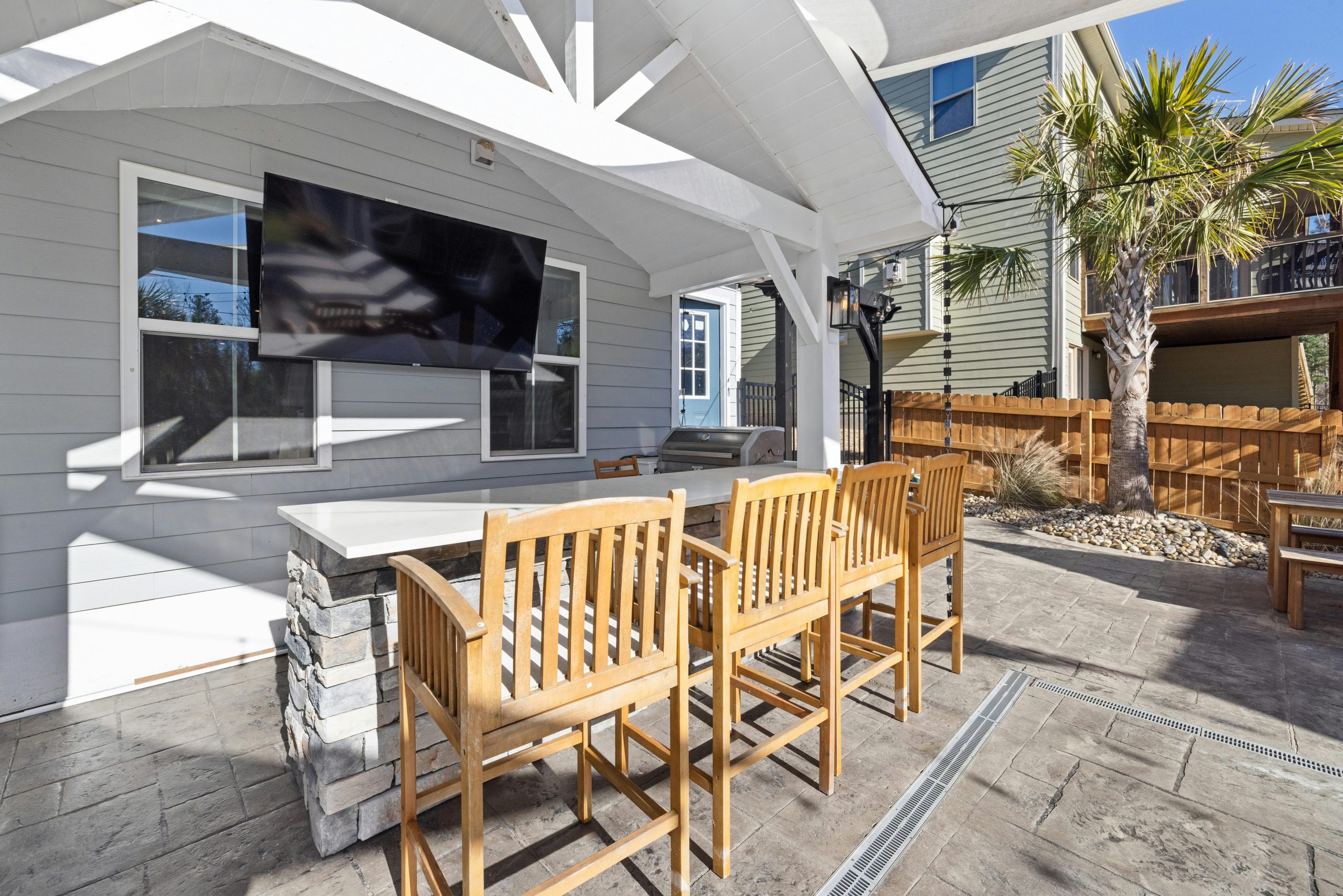
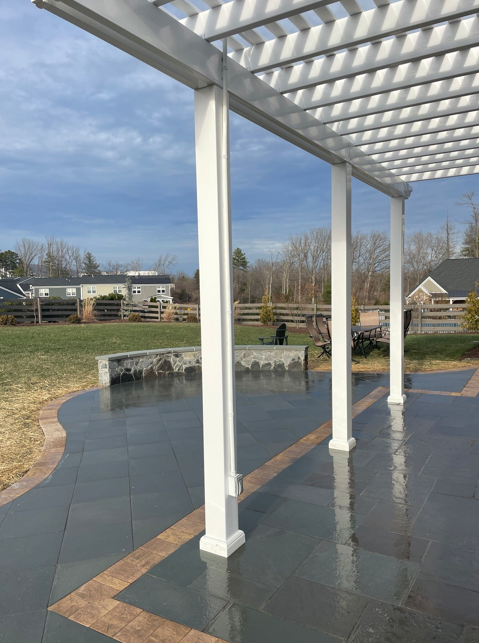
Patio Shapes and Layouts Should Fit the Setting
There isn’t one “right” patio shape. The layout should respond to both the house and the surrounding landscape.
In general:
- Linear, geometric patios tend to work well with:
- More contemporary homes
- Open yards with clean lines
- Spaces that transition directly into lawn
- Organic, flowing shapes work well with:
- Wooded or natural settings
- Heavier landscaping
- Homes with a more traditional or rustic feel
- Blended designs can combine both:
- Structured areas near the house
- Softer, more natural edges as you move outward
The key is consistency. When the patio feels like it belongs to both the house and the land, it doesn’t stand out—it settles in.
Create Seating Areas That Actually Get Used
A patio without defined seating is rarely successful.
People gather in specific ways, and the layout should support that.
Some practical considerations:
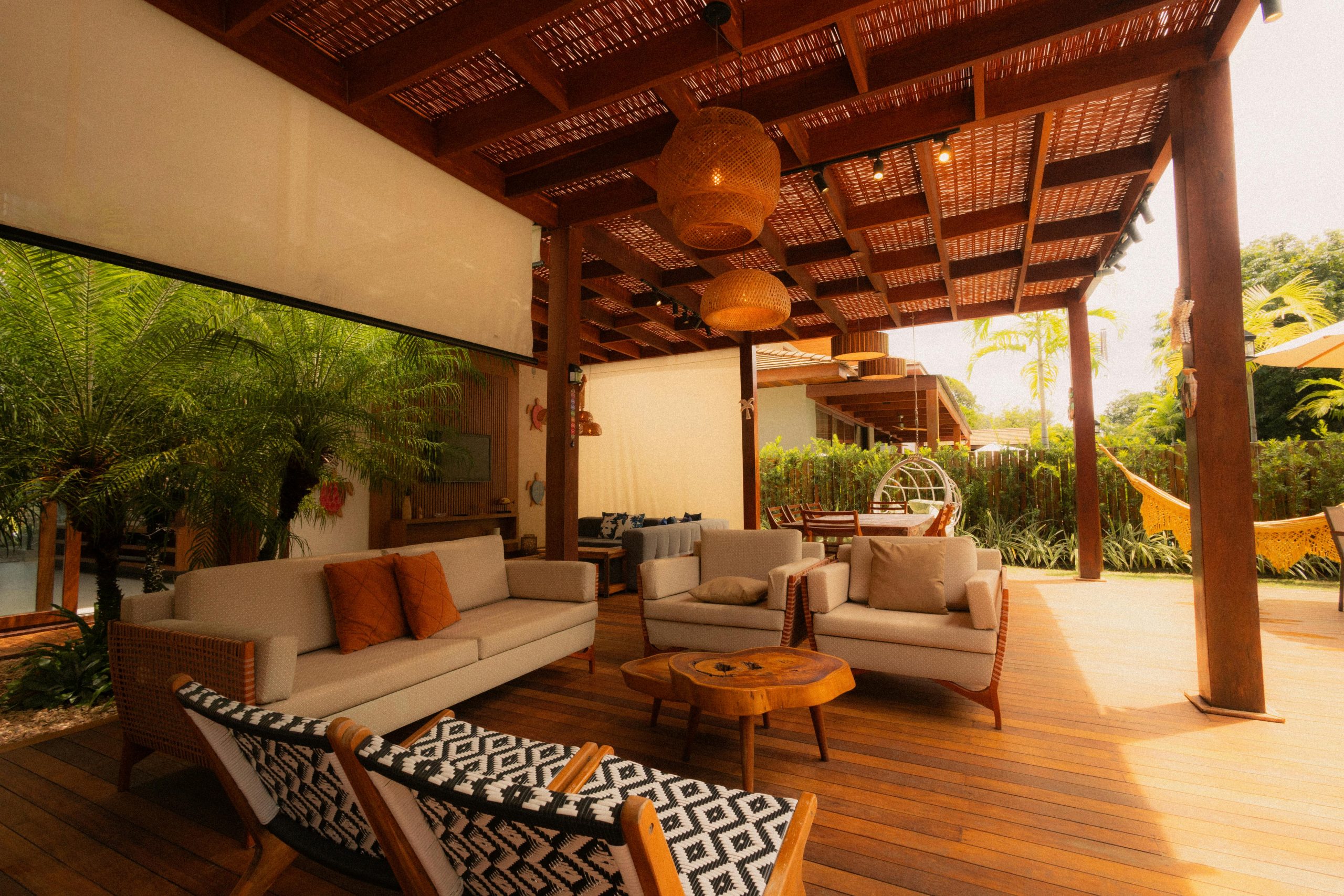
- Keep conversation areas tight enough so people aren’t spread too far apart
- Position seating with a clear focal point (fire feature, view, or even the house)
- Avoid scattering furniture randomly across a large surface
- Make sure there is easy movement between zones
When seating is intentional, the space naturally fills with people. When it’s not, the patio often sits empty.
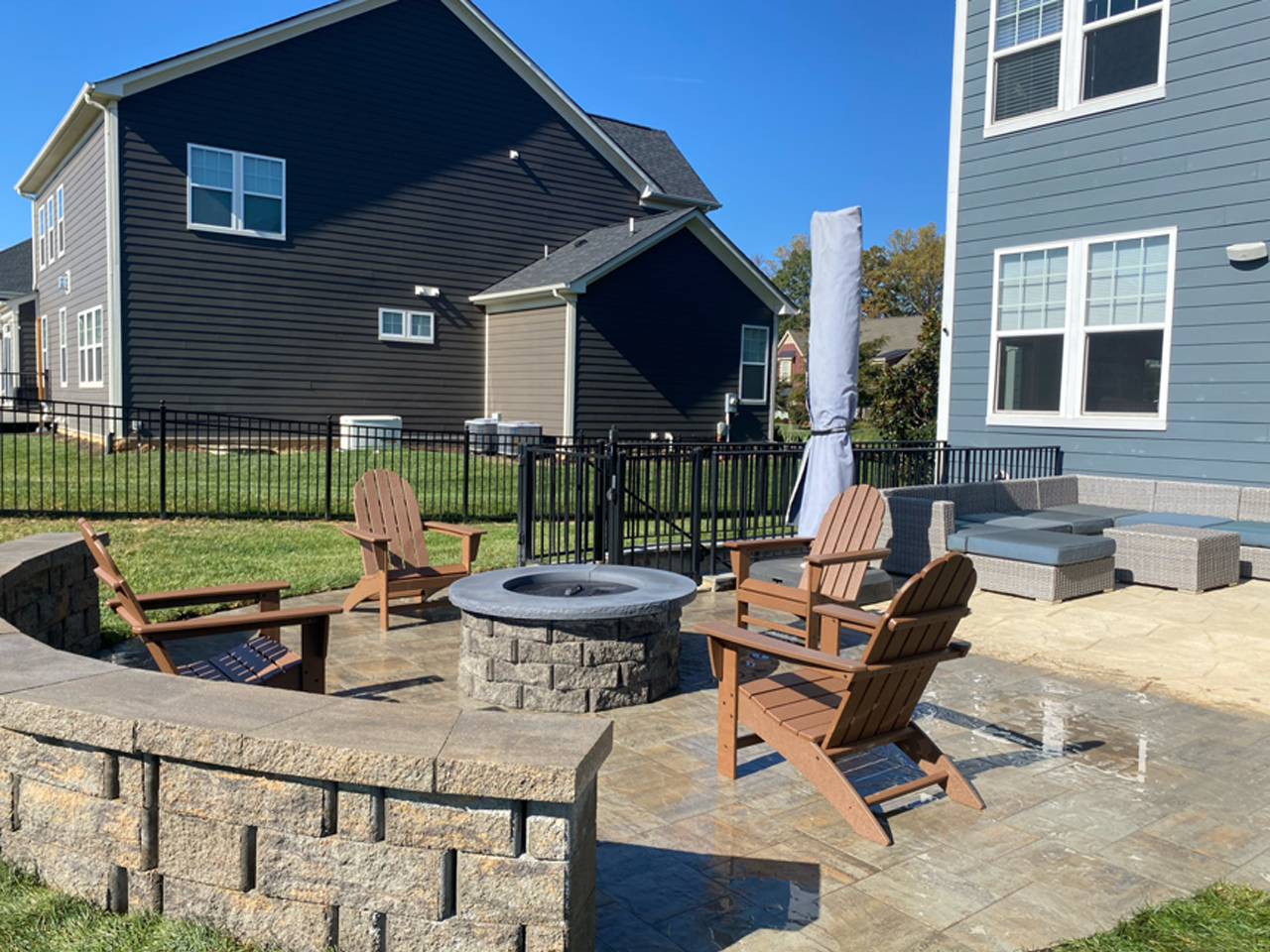
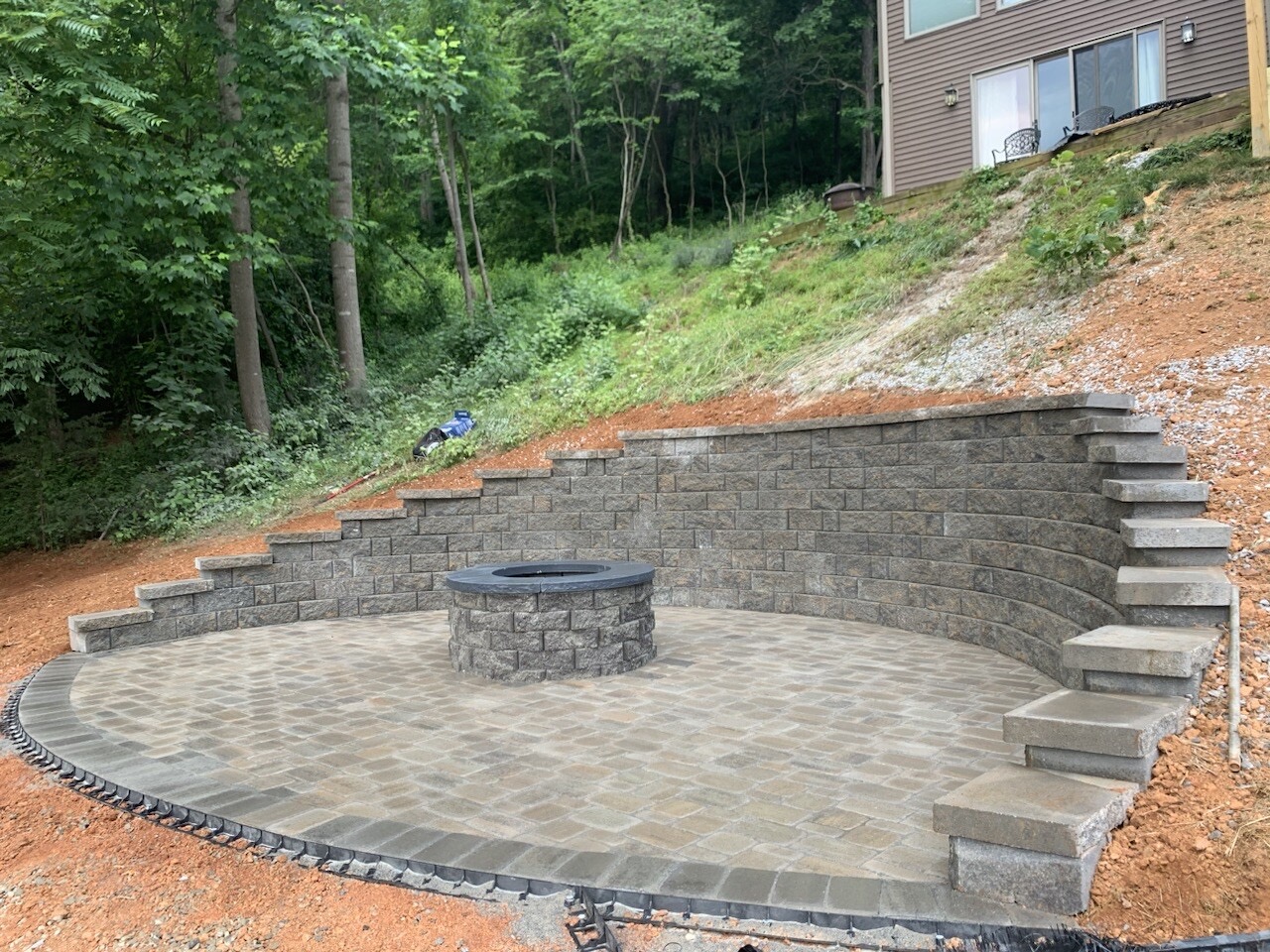
Blend the Patio Into the Landscape
A patio should never feel like it was dropped into the yard as an afterthought.
The most effective way to avoid that is to design hardscape and landscaping together.
A few practical approaches:
- Soften edges with planting beds instead of hard transitions
- Be intentional about where people move on and off the patio
- Use landscaping to define areas that are meant for:
- Travel
- Sitting
- Visual interest
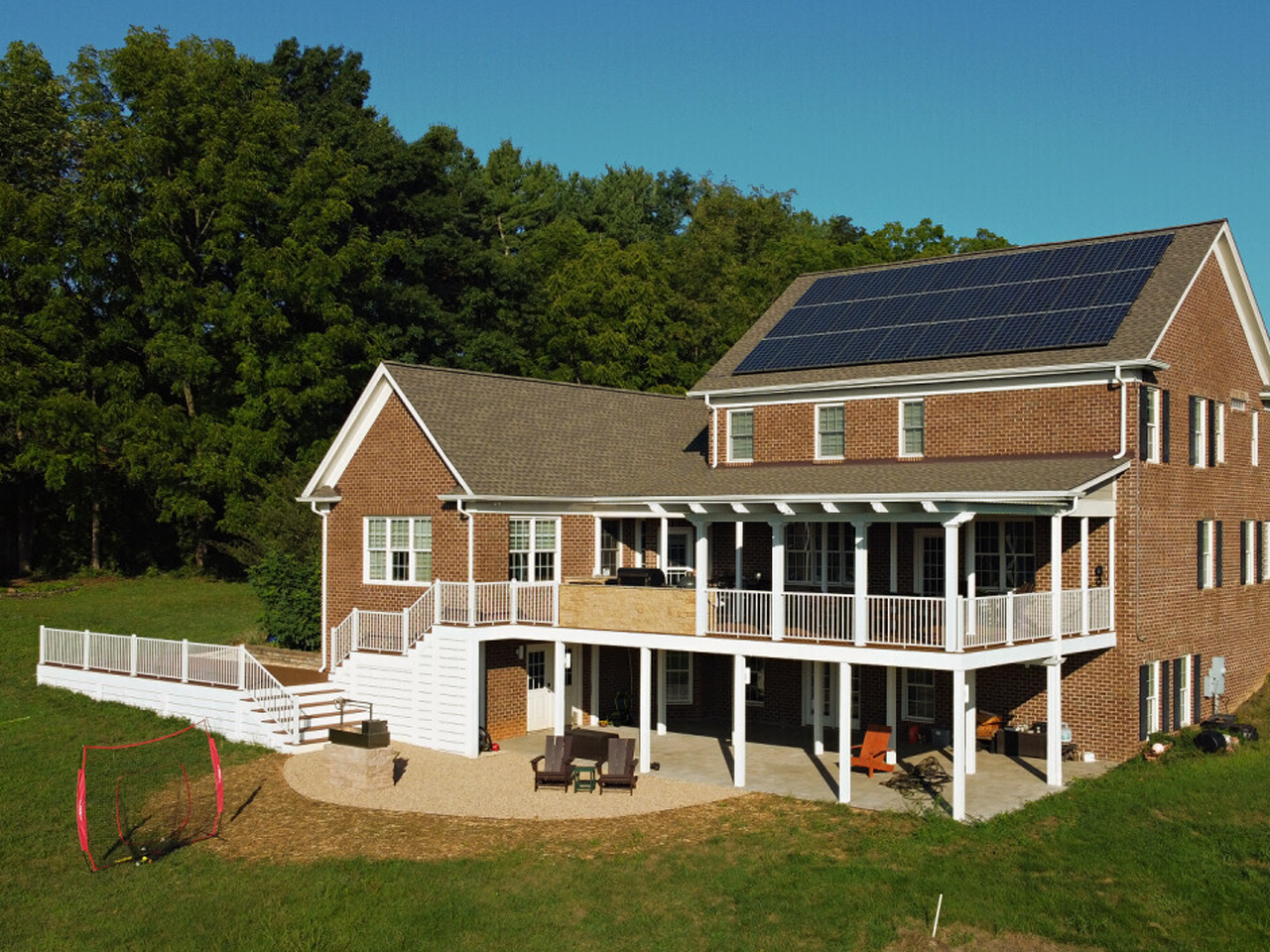
Because patios sit at ground level, they’re uniquely positioned to create intimate outdoor spaces.
In a wooded setting, for example, a small patio can become a quiet place to sit within the landscape—not separate from it.
That’s where good design shifts from functional to meaningful.
Designing for Small, Medium, and Large Backyards
The size of the yard changes how a patio should be approached.
Small Backyards
Constraints drive the design.
- Layout options are limited, so everything must be intentional
- Built-in features (seating, planters, walls) often make better use of space
- Flexibility is less important than efficiency
In these settings, every square foot has to work.
Medium Backyards
This is where balance matters.
- Enough space for multiple zones, but still requires thoughtful layout
- A mix of fixed elements and movable furniture works well
- Landscaping plays a larger role in defining the space
This is often where good planning makes the biggest difference.
Large Backyards
Space creates opportunity—but also risk.
- It’s easy to overbuild or lose definition
- Patios can be more open, with furniture creating the structure
- Layout should still guide movement and gathering
In larger settings, restraint often leads to better long-term use.

A Better Way to Think About Patio Design
A patio is not just a surface—it’s a place where life happens.
When it’s done right:
- People naturally gather
- Movement feels easy
- The space fits both the home and the land
When it’s not:
- It looks good from a distance
- But doesn’t get used the way it should
The difference is almost always planning.
Taking the time to think through layout, use, and integration upfront leads to a space that holds up—not just structurally, but in how it’s lived in over time.
Let’s Design It Right From the Start
Every property is different. The house, the land, and how you want to live outdoors all play a role.
At Bear Creek, we help clients think through those details before anything gets built—so the patio isn’t just added to the backyard, but becomes part of it.
Let us design a patio layout tailored to your home.

Written by: Brian Mininger
I grew up in Waynesboro, Virginia, and currently live in Greenville on Bear Root Farm with my wife, Victoria, co-founder of Bear Creek Outdoor Living. We have four daughters and three sons-in-law, several of whom work with us, and I enjoy spending time together as a family and working alongside them.
I love being outdoors, especially hiking and trail running on our public lands, and I regularly participate in ultra-running events. At Bear Creek, I enjoy helping clients guide their vision into reality and providing steady, visionary leadership to our team.