
Outdoor Lighting for Patios: What Works
A well-designed patio should feel just as inviting after sunset as it does during the day. Thoughtful lighting is what makes that possible.
For many homeowners, lighting is not something they think about until they begin expanding their outdoor living space. A single fixture mounted on the house may work for a small patio or deck, but once a space extends into the yard—with walkways, seating areas, fire features, or landscape elements—dark zones quickly become an issue.
The goal is not simply to make everything bright. In fact, the best patio lighting creates warmth, comfort, and visual appeal without harsh glare. Done well, lighting improves safety, highlights the design, and sets the mood for the entire evening.
Start with Layered Lighting
One of the most effective principles in patio lighting design is layering.
Rather than relying on a single bright overhead light, the better approach is to use multiple lighting sources at lower intensity. This creates a softer, more balanced effect and makes the space feel more refined.
At Bear Creek, outdoor lighting often falls into three primary layers:
- Architectural lighting — fixtures mounted on the home, porch, pergola, or other structures
- Low-voltage landscape and hardscape lighting — integrated into planting beds, retaining walls, walkways, and pavers
- String lighting — warm Edison-style LED lighting that adds atmosphere over patios and seating spaces
Using several smaller sources of light typically creates a far more comfortable environment than one strong fixture.
A traditional floodlight approach may technically illuminate the area, but it often produces glare, harsh shadows, and a flat, uninviting feel.
By contrast, layered lighting gives depth and warmth.

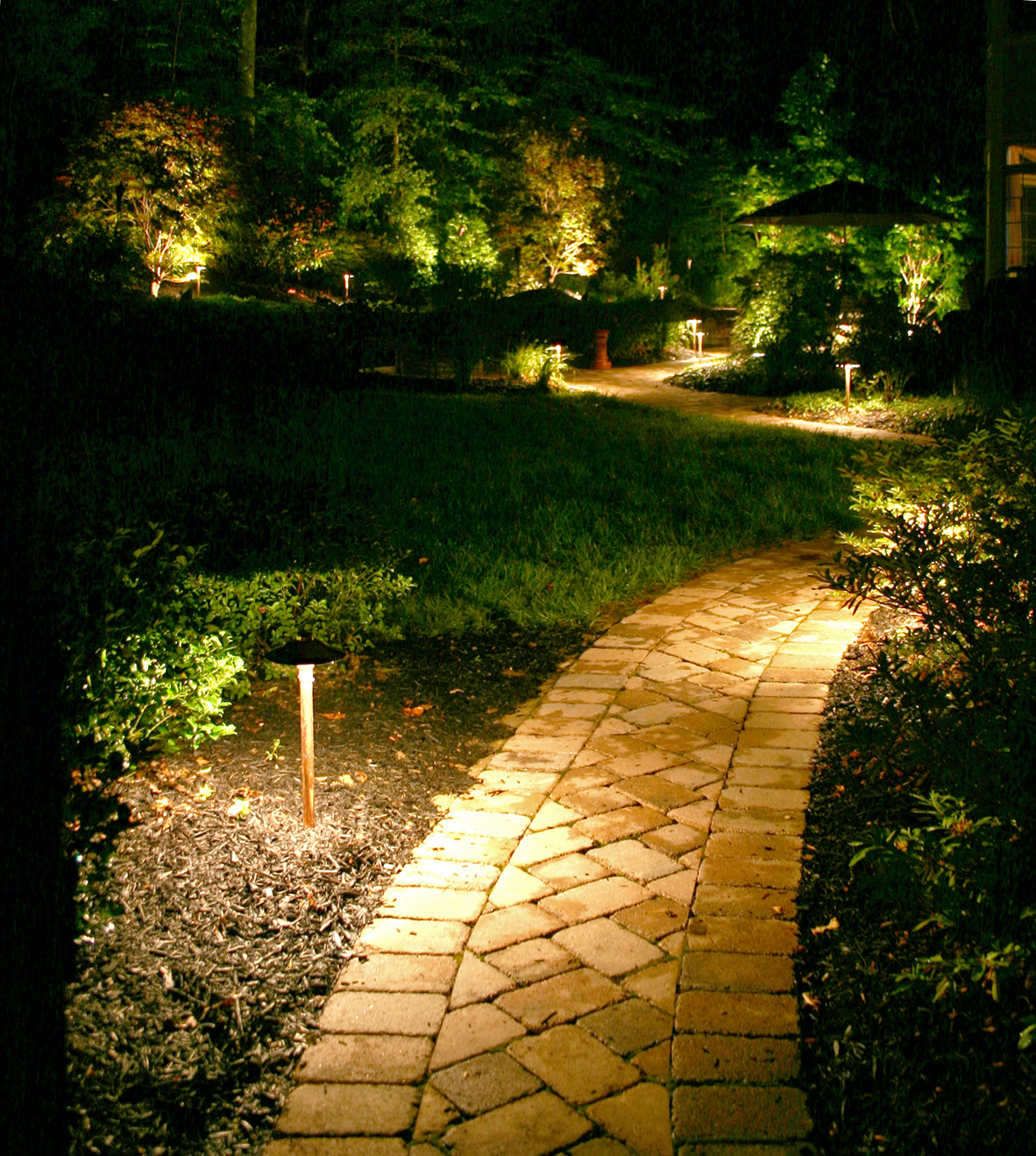
Path Lighting vs. Accent Lighting
When planning backyard lighting, the first priority should always be safe movement through the space.
This means starting with:
- walkways
- steps
- transitions between elevations
- connections from the house to the patio
- routes to outdoor kitchens, pools, or fire features
Path and travel lighting should come first because it serves a practical purpose.
A strong example is stair lighting.
Instead of using one bright overhead fixture to light an entire staircase, a more effective approach is to install riser lights directly into the steps. This illuminates exactly where your foot lands, removes dark spots, and avoids bright hotspots or shadows.
Often, once path lighting is thoughtfully designed, it also contributes significantly to the overall visual feel of the patio.
Accent lighting then becomes supplemental.
This may include:
- uplighting trees or specimen plantings
- highlighting stone walls or columns
- softly illuminating seating areas
- drawing attention to architectural features
In many cases, good path lighting already accomplishes both safety and ambiance.
Avoiding Over-Lighting
One of the most common mistakes in outdoor lighting is simply using too much of it.
Homeowners often assume brighter means better. In reality, over-lighting can make a beautiful patio feel sterile and uncomfortable.
The goal is to create a space that encourages people to stay outside longer—not one that feels like a parking lot.
A useful principle is this:
More fixtures with lower brightness generally produce a better result than fewer fixtures with harsh intensity.
Soft, even light preserves mood.
It also allows focal features—such as a fireplace, landscape planting, or string lights—to stand out naturally.
The right lighting should support the evening experience, not dominate it.


Integrating Lighting into the Design
The best lighting plans are not added as an afterthought.
They are integrated into the patio design from the beginning.
This is especially important as outdoor living spaces grow farther from the house. Areas that seem bright enough during the day can become disconnected and unusable at night without intentional lighting.
When lighting is considered early, fixtures can be built seamlessly into:
- paver borders
- seat walls
- stair risers
- landscape beds
- pergolas and structures
This keeps the design clean and avoids the look of temporary add-ons.
For prospective homeowners planning a new patio project, this is where professional design makes a significant difference. Lighting should work with the layout, circulation, and evening lifestyle of the space.
A well-lit patio is not just safer—it feels finished.
Make Evenings More Comfortable
The best outdoor spaces invite people to linger.
Whether it is dinner with friends, time with family, or a quiet evening outside, good lighting extends how the space is used and enjoyed.
At Bear Creek, we design lighting to make evenings feel comfortable, warm, and visually inviting—never harsh or overpowering.
If you are planning a new patio or outdoor living space, we can help design lighting that fits both the function and feel you want.

Written by: Brian Mininger
I grew up in Waynesboro, Virginia, and currently live in Greenville on Bear Root Farm with my wife, Victoria, co-founder of Bear Creek Outdoor Living. We have four daughters and three sons-in-law, several of whom work with us, and I enjoy spending time together as a family and working alongside them.
I love being outdoors, especially hiking and trail running on our public lands, and I regularly participate in ultra-running events. At Bear Creek, I enjoy helping clients guide their vision into reality and providing steady, visionary leadership to our team.