
How to Maximize Small Backyard Spaces
Smart layouts that make small yards feel bigger
In many neighborhoods around Crozet, Staunton, and Harrisonburg, we see a consistent pattern: well-built homes on relatively small lots. Houses are close together. The community may offer shared green space, but your private backyard is limited.
That does not mean it has to feel tight or compromised.
A small backyard can be rich, intimate, and restorative — if it’s designed intentionally. The biggest mistake we see is not the size of the yard. It’s the lack of a thoughtful, holistic plan. When features are added randomly over time, the result is poor traffic flow, awkward proportions, and a space that feels smaller than it actually is.
Let’s look at how to approach small backyard design correctly.
Start With a Cohesive Plan — Not Random Additions
In tight, in-town settings, every square foot matters.
Without a unified plan, homeowners often:
- Add a patio in one location
- Later drop in a hot tub somewhere else
- Install fencing without considering views or circulation
- Squeeze in furniture that’s out of scale
The yard becomes fragmented.
The solution is simple:
Design the entire backyard at once — even if you build it in phases.
When the full vision is considered upfront, you gain:
- Defined zones that feel intentional
- Clear, comfortable traffic flow
- Proper scale
- Layered privacy
- Features that complement each other
That’s how you truly maximize backyard space.

Multi-Use Features: Make Every Square Foot Work
In a small yard, nothing should serve only one purpose.
Smart tiny yard patio ideas revolve around integration.
Examples include:
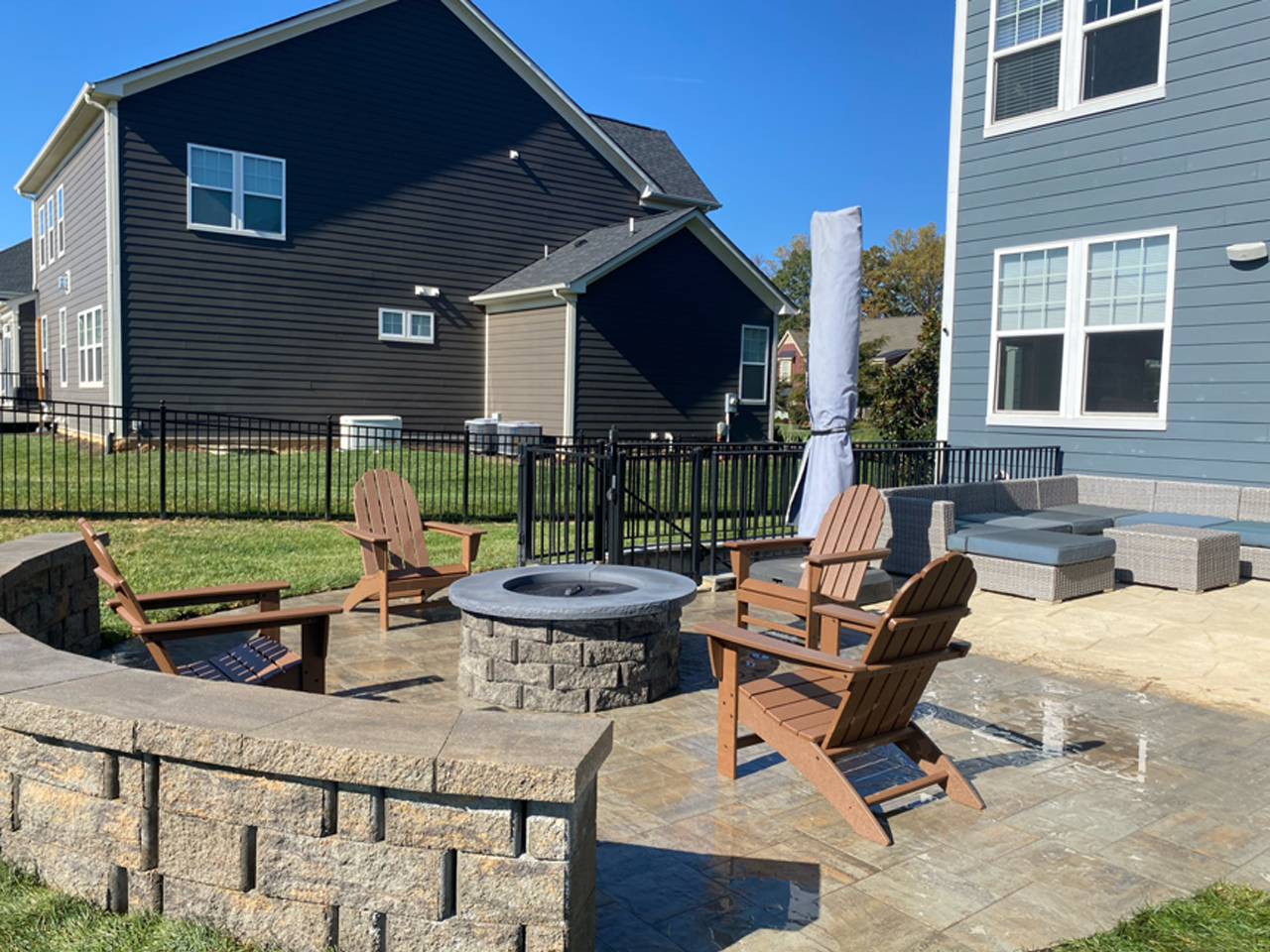
- Retaining walls that double as seating
- A spa patio that also functions as dining space
- A plunge pool that becomes the visual focal point
- Fencing layered with landscaping for both privacy and softness
- Raised beds that define edges while growing herbs or vegetables
The key is proportion. Oversized features overwhelm a small yard. Proper scale makes it feel curated.
Built-Ins Reduce Clutter
Freestanding furniture and scattered accessories eat up visual space.
Built-ins restore order.
Effective built-ins in small backyards include:
- Integrated bench seating
- Built-in fire pit seating
- Compact outdoor kitchen islands
- Planters incorporated into hardscape
- Narrow bar counters along fence lines
When structure and seating are integrated, you reduce clutter and free up movement space. The yard feels open because the layout is disciplined.
This is where many small backyards go wrong — too many loose pieces instead of designed elements.
Think Vertically
When you can’t expand outward, build upward.
Vertical design accomplishes three things:
- Creates privacy
- Adds visual depth
- Softens hardscape-heavy layouts
In-town backyards often lose most or all of their lawn once properly designed. That’s not necessarily a problem — but it does mean greenery must be intentional.
Vertical opportunities include:
- Layered landscaping along fences
- Trellises with climbing plants
- Pergolas that provide overhead structure
- Privacy screens integrated with planting
- Tall ornamental grasses or small trees
- Raised garden beds for herbs and flowers
Natural elements are essential. Without them, a small yard can feel like a hardscape enclosure. With them, it becomes tranquil.
Case Study: A Typical In-Town Backyard Transformation
This is a common scenario in our region:
- Large home
- Small yard
- Neighbors close on both sides
- Minimal privacy
- Limited usable outdoor space
Before
- Builder-grade patio
- Open, undefined yard
- Little screening from neighbors
- Furniture scattered without structure
- Corners underutilized
The yard felt exposed and unfinished.
After (Intentional Design Approach)
- Patio scaled appropriately to the home
- Privacy fencing layered with landscaping
- Compact plunge pool centered as a focal point
- Built-in seating wall
- Raised herb and vegetable beds
- Integrated lighting
- Minimal but purposeful lawn space
The space did not feel smaller. It felt intentional.
The difference wasn’t more features.
It was better decisions.


Design Principles That Make Small Yards Feel Bigger
If you want to truly maximize backyard space, these principles matter:
- Scale features carefully
- Limit material changes
- Create clear circulation paths
- Use built-ins over loose furnishings
- Layer vertical elements
- Define zones without over-dividing
- Introduce greenery strategically
Small spaces reward discipline.
They punish randomness.
Small Yards Can Be Feature-Rich
There’s a misconception that a small yard limits possibility.
In reality, some of the most peaceful and refined outdoor spaces we see are compact. When thoughtfully designed, small backyards can include:
- A plunge pool or spa
- A sauna
- A modest outdoor kitchen
- A fire feature
- Raised garden beds
- A shaded seating area
The key is holistic planning from the beginning.
When done well, a small yard feels intimate rather than cramped — and often becomes more used than larger spaces that lack structure.

Small Yards Deserve Great Spaces
If you live in one of our in-town neighborhoods and feel constrained by your lot size, don’t assume you’re limited.
With intentional small backyard design, smart tiny yard patio ideas, and a comprehensive plan to maximize backyard space, you can create something far better than you might expect.
Small yards deserve great spaces — we are here to help.

Written by: Brian Mininger
I grew up in Waynesboro, Virginia, and currently live in Greenville on Bear Root Farm with my wife, Victoria, co-founder of Bear Creek Outdoor Living. We have four daughters and three sons-in-law, several of whom work with us, and I enjoy spending time together as a family and working alongside them.
I love being outdoors, especially hiking and trail running on our public lands, and I regularly participate in ultra-running events. At Bear Creek, I enjoy helping clients guide their vision into reality and providing steady, visionary leadership to our team.