
Fire Pit Placement Tips for Safety and Style
A well-placed fire feature does more than provide warmth. It becomes a natural gathering place, a visual focal point, and often one of the most enjoyed elements in an outdoor living space. In the Shenandoah Valley and mountain communities of Virginia, thoughtful placement matters even more because wind, slopes, mature trees, and neighborhood restrictions all shape what will work well.
At Bear Creek, we approach fire features as part of the overall outdoor experience. The goal is not simply to “fit a fire pit somewhere,” but to make it feel like the heart of the backyard.
Start With Safe Distance
Before thinking about seating or aesthetics, placement has to begin with safety.
One of the most common mistakes we see is placing a fire feature too close to the house, deck, porch roof, or nearby landscaping. This creates obvious safety concerns and can also make the space feel cramped rather than comfortable.
In our area, many local guidelines require outdoor fire features to be at least 15 feet from structures and combustibles, and communities such as Wintergreen have particularly strict requirements because of the mature forest environment. (waynesboro.va.us)
For mountain properties, this also means paying attention to:
- low tree branches
- wood fencing
- dry ornamental grasses
- stacked firewood storage
- overhanging decks and porches
A fire feature should feel intentionally positioned within the space, not squeezed into leftover square footage.
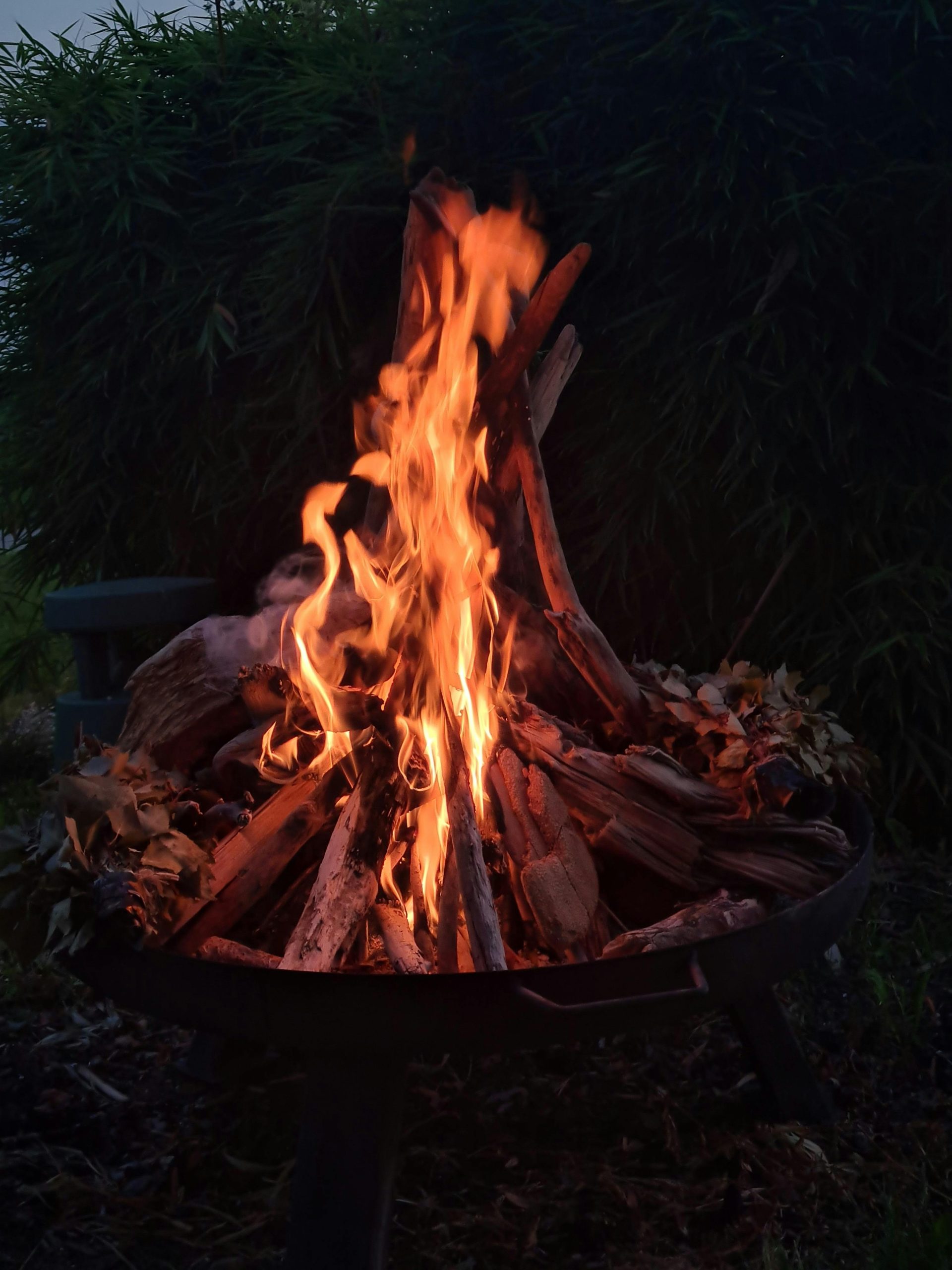
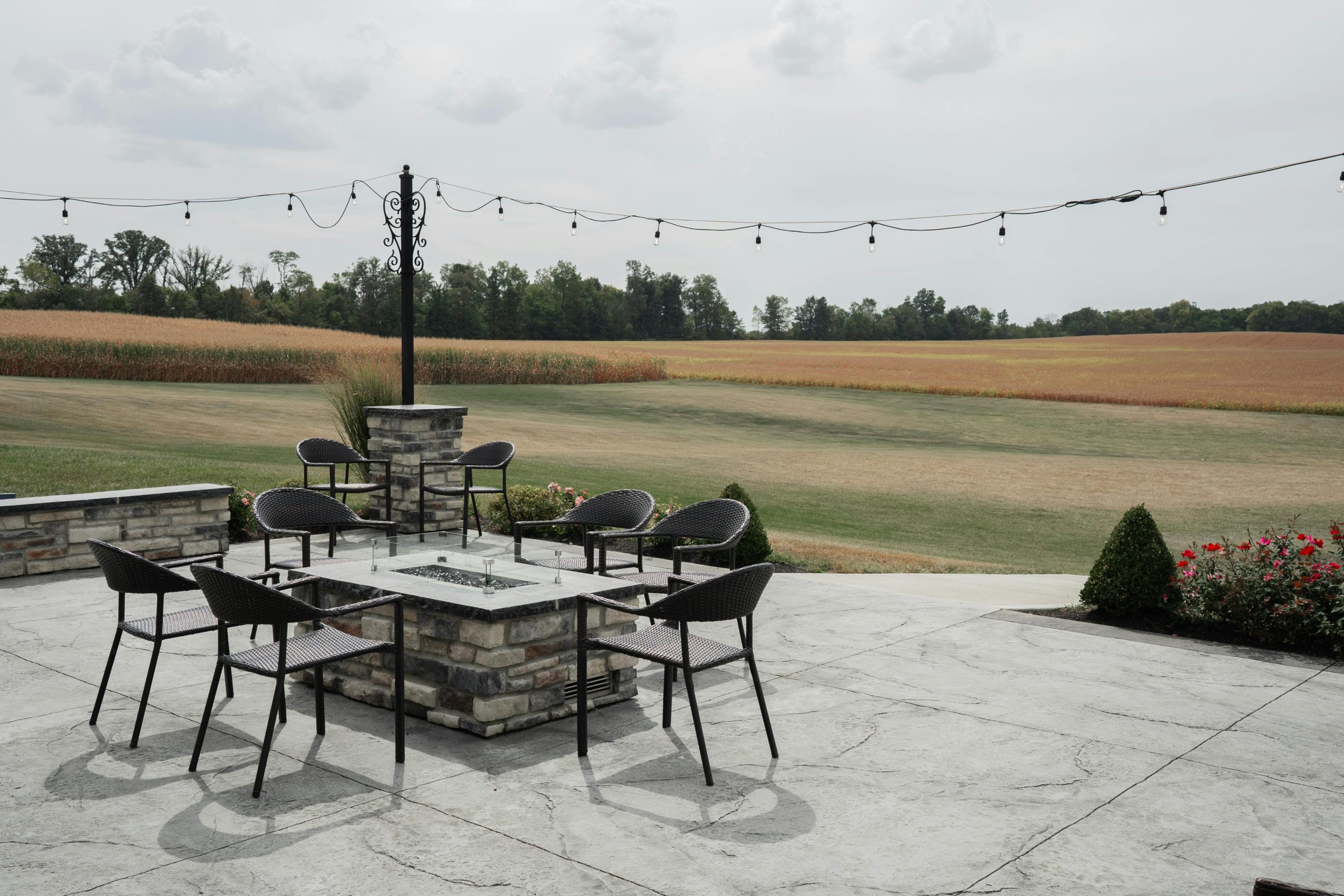
Design Around Wind and Smoke
In the Shenandoah Valley, wind is often the factor that determines whether a fire pit becomes a favorite gathering spot or an area people avoid.
Mountain and hillside properties can experience shifting wind patterns that change throughout the evening. If this is ignored, smoke can constantly blow into seating areas, across the patio, or back toward the home.
This matters for both gas and wood-burning features, but it is especially important for wood fires.
Before finalizing placement, we think through:
- the prevailing wind direction
- how the slope of the property channels airflow
- nearby walls, hedges, or grade changes
- where smoke will drift when guests are seated
A fire feature should invite people to linger, not force everyone to keep moving chairs to escape the smoke.
Let the Fire Feature Anchor the Experience
From a design standpoint, the fire feature should help organize the space.
Rather than treating it as an isolated element, we use it to shape how the backyard functions. The seating layout is critical here.
The best fire pit spaces are designed around the people who will actually use them:
- families gathering in the evening
- friends entertaining guests
- grandparents with visiting grandkids
- couples enjoying quiet mountain views
The seating should allow people to enjoy the fire while still maintaining views of the rest of the backyard, surrounding landscape, and mountain setting.
In many cases, the fire feature works best when it supports the larger outdoor living plan:
- aligned with the patio
- connected to a pool or spa area
- integrated with pathways and steps
- positioned to preserve sightlines
The space should feel natural to move through, with clear traffic flow around the fire area rather than forcing people to cut awkwardly through seating.

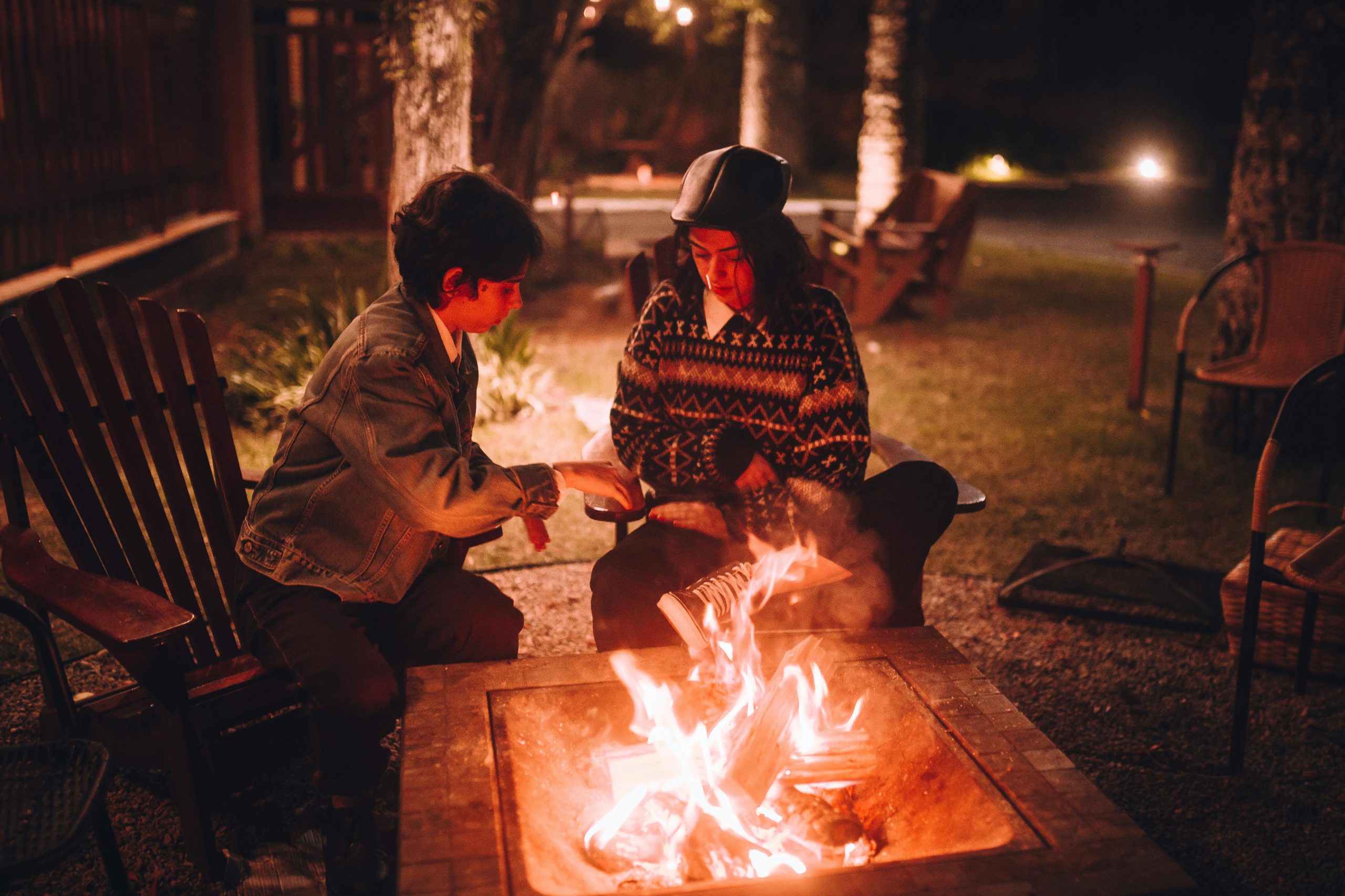
Wood vs. Gas: Lifestyle Matters
Most homeowners already have a strong preference.
Some love the natural sound, smell, and experience of a wood-burning fire. If they have easy access to wood and enjoy the ritual of building a fire, that can be a wonderful fit.
Others prefer the simplicity of gas:
- instant on and off
- no wood storage
- no ash cleanup
- less smoke
- easier use for frequent entertaining
In many Virginia mountain communities, restrictions also influence this decision.
For example, Wintergreen strongly limits open burning and generally encourages propane fire features because they are safer in forested settings. (Wintergreen Fire & Rescue)
This is why fire feature decisions should be made as part of the design process, not as an afterthought.
Common Placement Mistakes
The biggest mistakes we see are straightforward:
- too close to the house
- ignoring wind direction
- poor seating layout
- blocking views
- selecting the wrong feature for the family using it
For example, movable smokeless fire pits can be attractive and flexible, but they can become extremely hot on the exterior. For families with young children, that may not be the right choice even if it looks appealing.
The best fire feature is the one that fits how your family actually lives.

The Right Fire Feature Feels Natural
A great fire pit does not feel added on. It feels like it belongs.
When thoughtfully placed, it becomes one of the premium features in the backyard — a place people naturally gather, relax, and make memories.
At Bear Creek, we design fire features as part of the complete outdoor experience so they are beautiful, functional, and safe for Virginia’s unique landscape conditions.
Thinking about adding a fire feature to your backyard? Let us help integrate it into a complete outdoor plan that fits your home, property, and lifestyle.

Written by: Brian Mininger
I grew up in Waynesboro, Virginia, and currently live in Greenville on Bear Root Farm with my wife, Victoria, co-founder of Bear Creek Outdoor Living. We have four daughters and three sons-in-law, several of whom work with us, and I enjoy spending time together as a family and working alongside them.
I love being outdoors, especially hiking and trail running on our public lands, and I regularly participate in ultra-running events. At Bear Creek, I enjoy helping clients guide their vision into reality and providing steady, visionary leadership to our team.