
Deck vs Patio vs Porch — Which Fits Your Life?
Homeowners often come to us saying, “We know we want a deck,” or “We’re pretty sure we need a patio,” or “We’ve always dreamed of a porch.”
Sometimes they’re right. Often, they’re working from assumptions—usually based on what already exists or what they’ve seen online.
This article lays out a clear comparison between a deck, patio, and porch—how each one functions, what they cost in real terms, and when each makes the most sense. The goal is not to push a product, but to help you choose the outdoor space that actually fits your life.
Decks: Elevated Living with a View
What a deck does best
Decks excel when elevation is involved. If your home sits above grade, on a slope, or overlooks a view, a deck often becomes the most practical and cost-effective way to create usable outdoor space.
Functionally, decks are used much like patios:
- Outdoor dining
- Seating and gathering
- Grilling and entertaining
Where decks differ is relationship to the landscape. They hover above it rather than blending into it.
Cost considerations
For comparable sizes and quality materials, decks and patios are often in a similar investment range. Composite decking and concrete paver patios frequently land in the same general tier. Costs shift based on:
- Height and structural requirements
- Material choices
- Site access and complexity
Best fit
A deck is usually the right choice when:
- The space needs to be elevated
- Views are a priority
- Terrain makes ground-level construction inefficient
Real-life example:
A mountain home with steep terrain and long-range views benefited from a deck that extended living space outward while taking full advantage of the setting—something a patio simply couldn’t do efficiently.
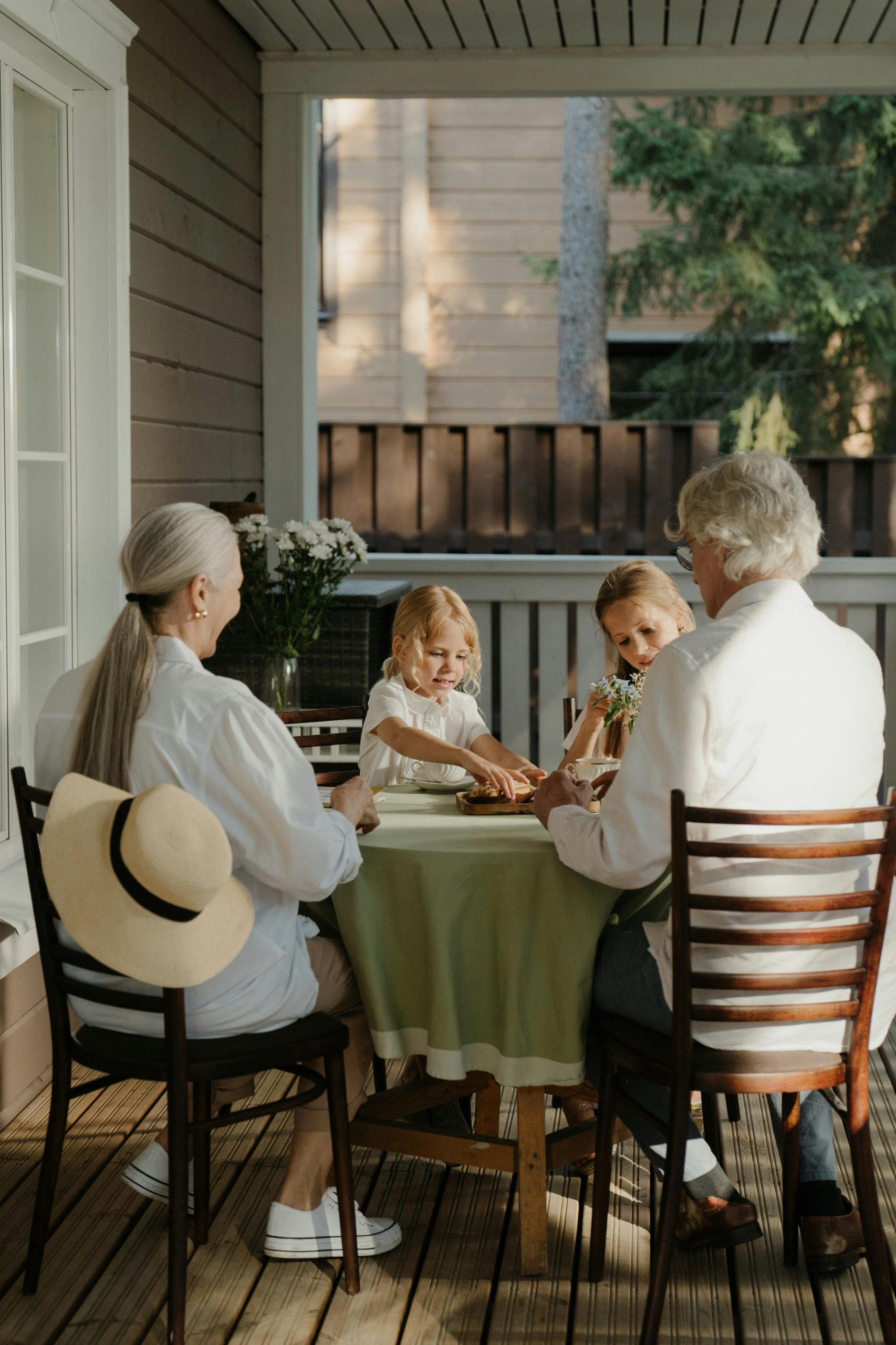


Patios: Grounded, Flexible, and Landscape-Driven
What a patio does best
Patios live at ground level and connect naturally to the yard and garden. They tend to feel more integrated with landscaping and are especially effective for families and social gatherings that flow between the house and yard.
Like decks, patios handle:
- Dining areas
- Fire pits
- Seating zones
But they do so with direct access to the landscape.
Cost considerations
Using concrete pavers, patios often land in the same general cost range as decks of similar size and quality. Cost drivers include:
- Site preparation and grading
- Retaining walls or steps
- Paver type and layout complexity
Best fit
A patio is often the right choice when:
- The home is at or near grade
- Easy yard access matters
- You want a natural transition between hardscape and landscape
Real-life example:
A single-level home with a flat yard used a patio and fire pit to create a space where adults gathered while kids moved freely between the patio and lawn—simple, functional, and highly usable.
Porches: Shelter, Shade, and Extended Seasons
What a porch does best
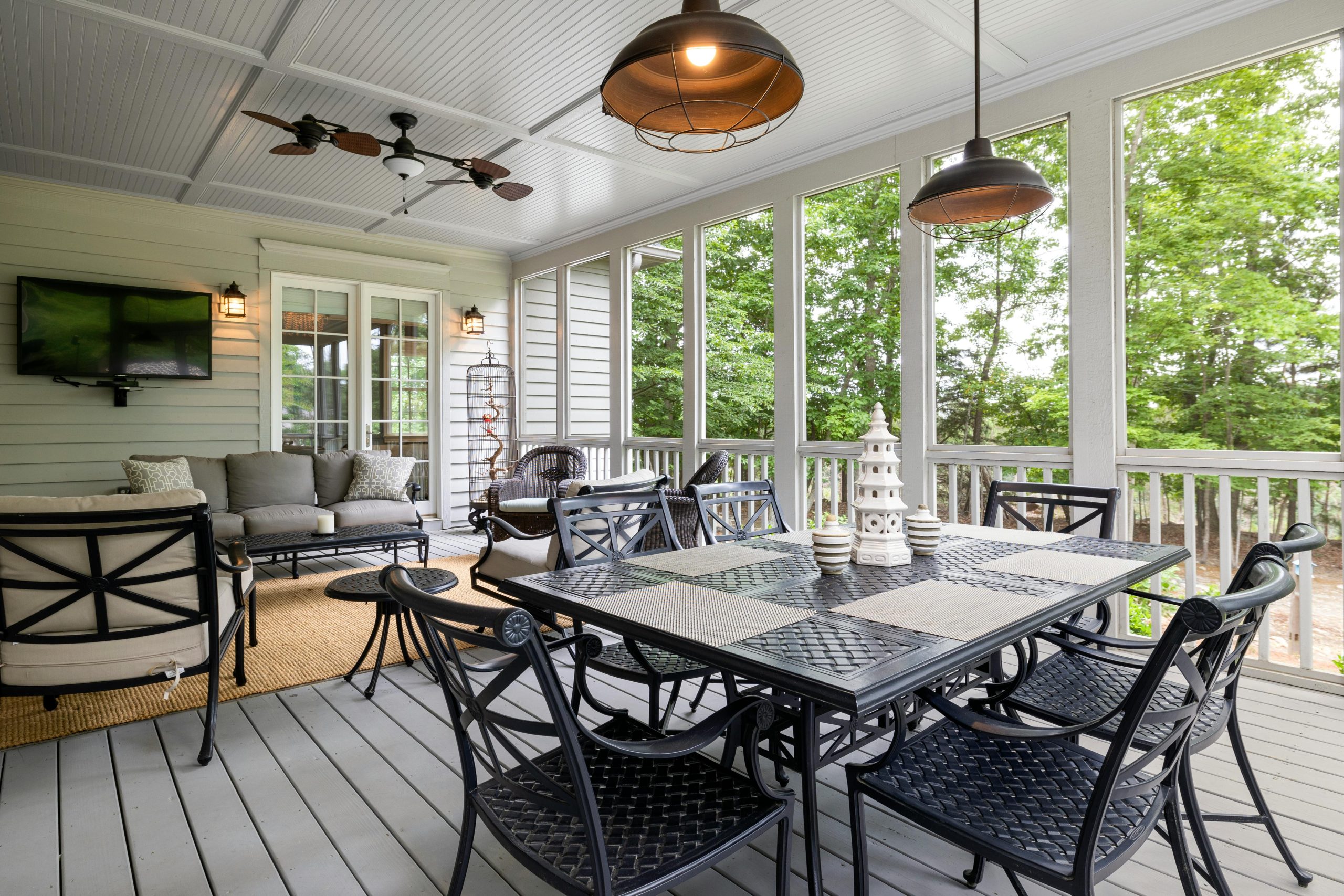
Porches introduce structure and protection. They provide:
- Shade from sun
- Shelter from rain
- Optional screening for bugs
- Extended seasonal use (especially with three-season designs)
This changes how and when a space gets used.
Cost considerations
A porch is a significantly higher initial investment because it involves:
- Structural framing
- Roof systems engineered for snow loads
- Integration with the home
Costs vary widely depending on:
- Open vs screened vs three-season
- Window systems and finishes
- Architectural integration
Best fit
A porch is usually right when:
- Shade and shelter are essential
- Sun exposure limits patio or deck use
- You want to extend spring and fall outdoor living
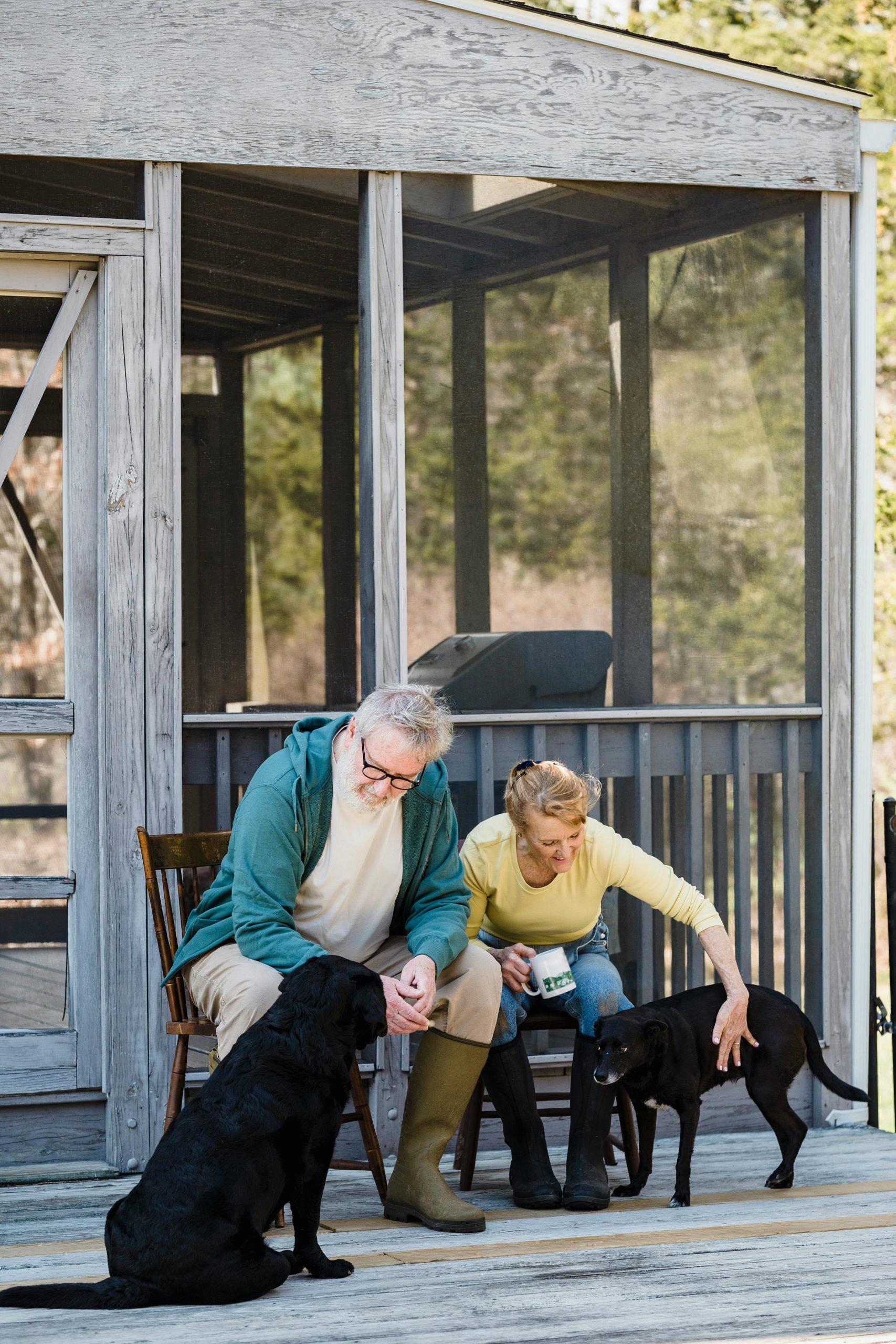
Real-life example:
A three-season porch with strong sun exposure became a daily retreat in spring and fall—providing comfort long after uncovered spaces would have gone unused.
Common Outdoor Living Layout Mistakes
Before calling a professional, many homeowners unintentionally lock themselves into poor decisions.
The most common mistakes we see:
- Designing based on the house, not lifestyle
For example, building a deck to the corner of the house simply because it’s there—rather than because it serves a purpose. - Replacing what exists without rethinking it
Old decks or patios are often rebuilt exactly as they were, even though they were designed for a previous owner’s lifestyle. - Letting size be arbitrary
Bigger is not always better. Some spaces end up oversized and unused, while others are too small to function properly.
Any time an old structure is removed, you have a blank slate. That’s the moment to rethink how the space should work—not just rebuild what was there.
What Matters More Than the Type
Decks, patios, and porches are all timeless. Trends are rarely the issue. The real question is fit.
The most important considerations are:
- How you actually enjoy being outdoors
- Whether you need shade or shelter
- How your home sits on the land
- How to get the best value from your budget
In many cases, the best solution isn’t either/or—it’s and. Some of the most successful outdoor living projects combine a porch, deck, and patio, each serving a different purpose.


Written by: Brian Mininger
I am originally from Waynesboro, VA and currently reside here with my wife and four daughters: Michaela, Anna, Rachel, and Kaitlyn. In my downtime, I really enjoy participating in activities for my daughters and the events that are going on at their schools. I also really love being outdoors. Specifically, hiking in Shenandoah National Park and trail running. I have competed in a few ultra-events and look forward to running more races in the future.