
Deck Design Tips That Stand the Test of Time
Deck layouts that age well and stay structurally sound
A well-built deck should do more than look good the day it’s finished. It should function naturally, hold up to the elements, and still feel right years down the road.
In Central Virginia and the Shenandoah Valley, decks take a beating—heat, moisture, freeze-thaw cycles. The difference between a deck that lasts and one that becomes a problem usually comes down to decisions made long before construction begins.
Here are the principles that matter most.
Layout That Fits Real Traffic Patterns
Most deck issues aren’t structural—they’re functional.
Decks serve as both living spaces and transition spaces. They connect the indoors to the outdoors, and they need to handle both roles without conflict.
A layout that works long-term starts with a few fundamentals:
- Respect existing access points – doors, stairs, and yard connections drive the layout
- Plan movement first – where people walk should be obvious and unobstructed
- Keep gathering areas out of traffic paths – seating should feel intentional, not in the way
- Think beyond the deck – where people are headed in the yard matters just as much as the deck itself
Too often, decks are designed around furniture first. That leads to tight walkways, awkward flow, and spaces that feel crowded.
When traffic patterns are thought through early, everything else falls into place. People can move naturally through the space without weaving around obstacles, and the deck feels comfortable instead of forced.
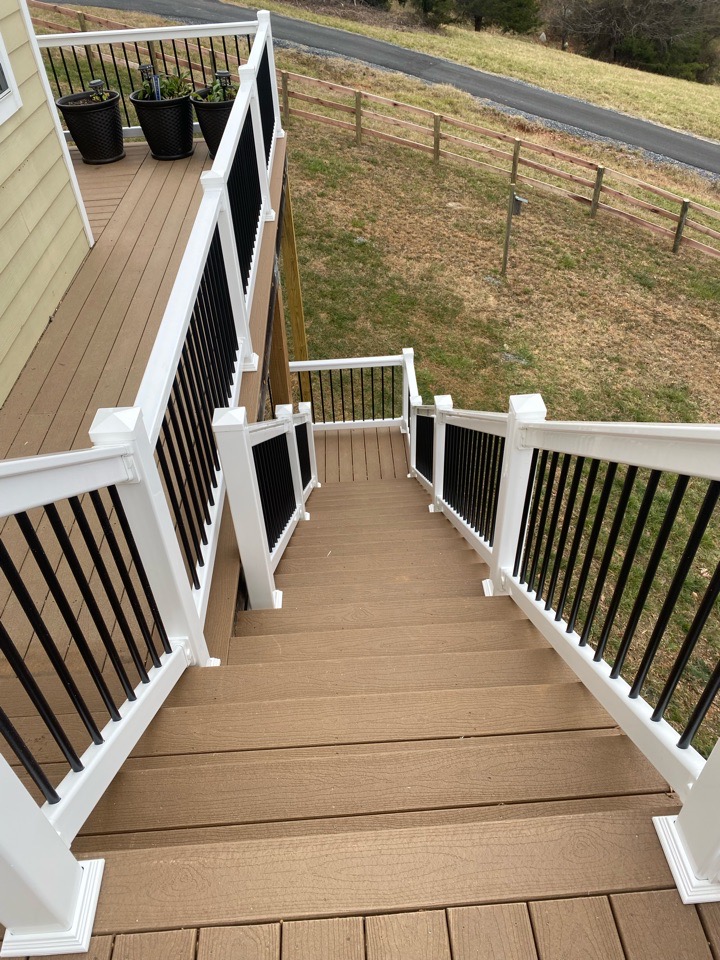
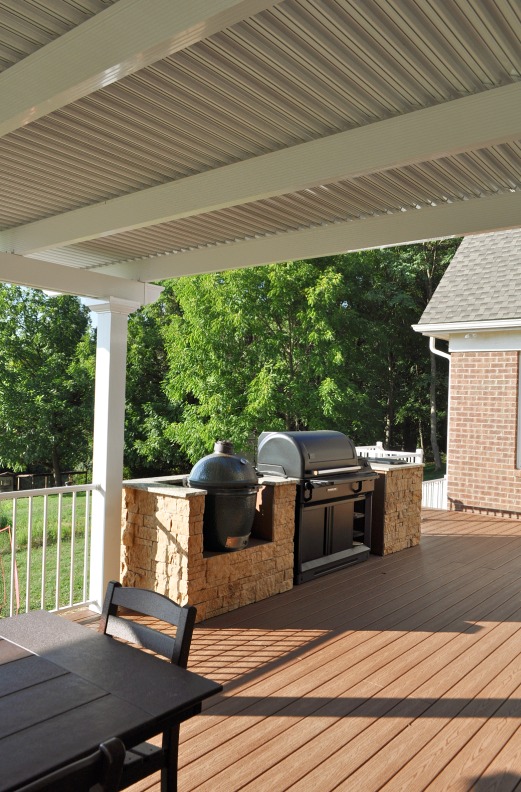
Railing Choices That Hold Up Over Time
Railing isn’t just a design detail—it’s one of the most exposed parts of the deck.
In Virginia’s climate, materials need to handle:
- Direct sun exposure
- Moisture and humidity
- Seasonal temperature swings
- Wind and weather
Wood railings can work, but they require consistent maintenance. Over time, they’re more prone to warping, cracking, and deterioration.
That’s why many long-term solutions incorporate:
- Metal rail systems
- Cable rail
- Composite materials
- Stone or masonry elements (where appropriate)
These materials tend to hold their shape and appearance longer with less upkeep.
There’s another factor that often gets overlooked: flexibility over time.
Older decks frequently included built-in benches around the perimeter. While that seemed practical at the time, it limits how the space can evolve. Most homeowners replacing those decks don’t want that again.
A better approach is to:
- Build the structure clean and open
- Use high-quality furniture for seating and function
- Allow the space to adapt as needs change
A deck that can evolve will stay useful longer than one that’s locked into a single layout.
Hidden Fasteners vs. Exposed Fasteners
This decision is often framed as structural, but it’s mostly about finish quality and long-term appearance.
From a performance standpoint:
- Quality fasteners—hidden or exposed—will both hold up well
- Low-quality exposed fasteners are where problems start (corrosion, staining, failure)
Where the difference becomes obvious is visually.
Exposed fasteners:
- Interrupt the surface visually
- Can detract from a clean, finished look
- May show wear over time
Hidden fasteners:
- Provide a cleaner, more refined surface
- Eliminate visible screw heads
- Typically result in a more consistent finish
If the goal is a deck that still looks good years later, hidden fastening systems are usually the better choice. But the key factor either way is using high-quality materials installed correctly.
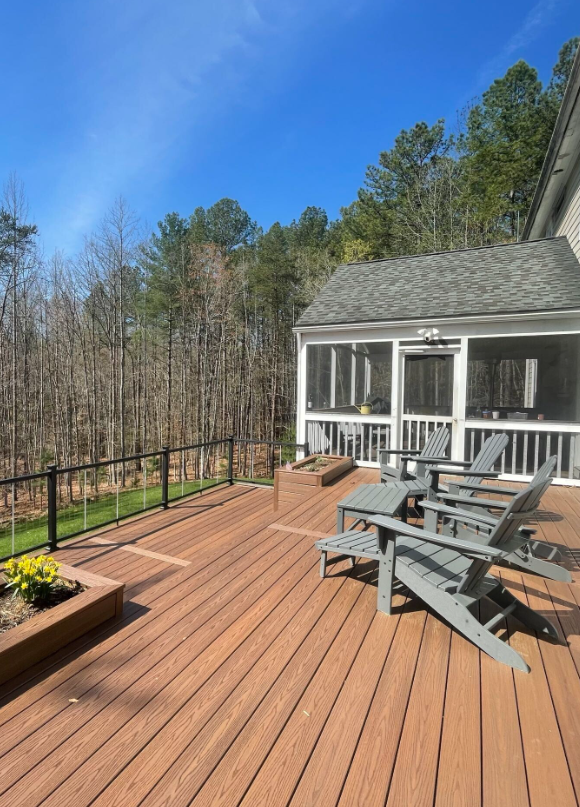
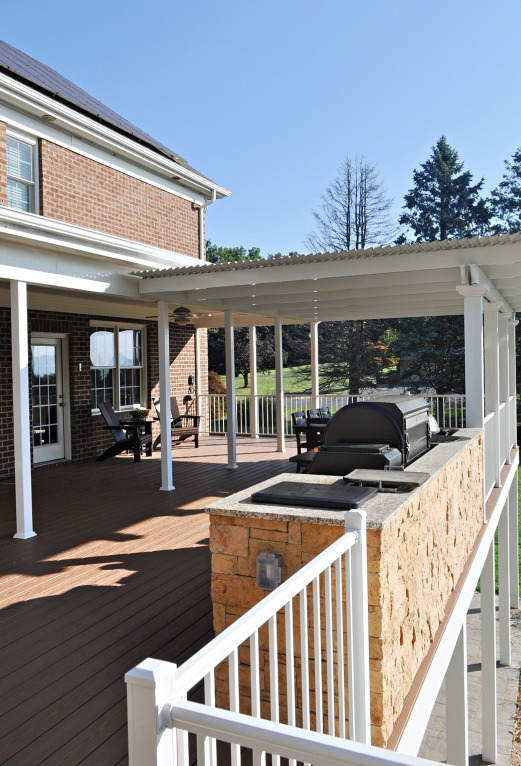

Why Quality Framing Matters More Than Anything
The most important part of a deck is the part you never see.
The frame determines whether the deck stays solid and straight—or starts to fail prematurely.
There are a few decisions here that make a significant difference:
1. Lumber Quality
Using #1 grade framing lumber instead of #2:
- Reduces knots and defects
- Provides straighter boards
- Results in a more stable structure over time
It also tends to have lower moisture content at installation, which helps avoid future twisting and movement.
2. Protecting the Top of the Frame
The most common failure point in wood framing is where fasteners penetrate the top of joists.
Water enters at those points and accelerates rot.
Applying joist tape over framing members:
- Seals around fasteners
- Prevents water intrusion
- Significantly extends the life of the structure
It’s a small detail with a major impact.
3. Upgrading the Framing System
For those who want maximum longevity, there are alternatives to wood:
- Aluminum framing
- Steel framing systems
These materials:
- Stay straight and stable
- Resist moisture-related deterioration
- Provide a long-term structural solution
When paired with high-end decking materials like PVC, you can realistically build a deck system designed to last decades—with minimal structural degradation.
Final Thought
Deck design isn’t about trends—it’s about decisions that hold up under real use and real conditions.
When layout, materials, fastening methods, and framing are all handled correctly, the result is a deck that:
- Feels natural to use
- Holds up to the environment
- Still looks right years later
That’s what it means to build something that stands the test of time.
Let’s design a deck built to last.

Written by: Brian Mininger
I grew up in Waynesboro, Virginia, and currently live in Greenville on Bear Root Farm with my wife, Victoria, co-founder of Bear Creek Outdoor Living. We have four daughters and three sons-in-law, several of whom work with us, and I enjoy spending time together as a family and working alongside them.
I love being outdoors, especially hiking and trail running on our public lands, and I regularly participate in ultra-running events. At Bear Creek, I enjoy helping clients guide their vision into reality and providing steady, visionary leadership to our team.